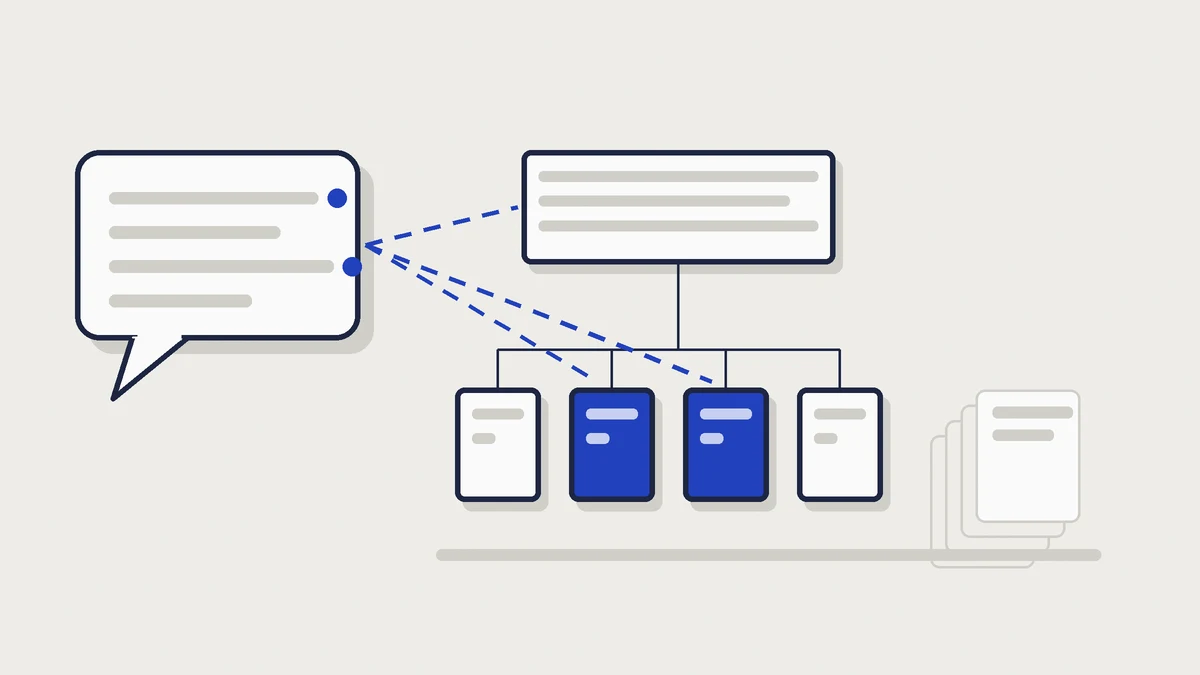
When ChatGPT cites a clinic website, it cites the homepage or a page about one service in one place. It mostly skips the blog. I sorted 661 citations to Australian clinic websites from 162 AI answers. On ChatGPT, homepages took 45%. Service and location pages took 36%. Blog posts took 2%. Across the clinic sites that run a blog, posts are 23% of the pages but drew 3.5% of the citations. Here is what gets quoted, and what to build first.
Which clinic pages does ChatGPT actually cite?
Mostly the homepage, then pages about one service or one place.
I asked ChatGPT, Claude and Perplexity the kind of question a patient types. "Can you recommend a podiatrist in Hobart for heel pain?" "Where should I go for a skin cancer check in Cairns?" There were 18 questions across 18 Australian suburbs and towns, and 162 answers in total. Then I took every link a reader could see in each answer and sorted it.
883 links came back. 661 of them (75%) went to a clinic's own website. The rest went to directories and public health pages. My earlier post on which AI engines name Australian clinics looked at who gets named. This post looks one level down: which page on the clinic's site gets the link.
Here are ChatGPT's 227 citations to clinic websites, sorted by the kind of page.
The pattern held on fresh questions. In the September set, homepages took 44% of ChatGPT's clinic citations. In the October set, asked about 12 new places, they took 48%.
Does ChatGPT stop at the homepage?
No. It almost always goes deeper too.
159 of the 162 answers linked to at least one clinic page. In 148 of those 159, the engine linked to an inner page. Only 11 answers used homepages alone. ChatGPT went past the homepage in 58 of its 64 answers that cited a clinic.
So the homepage is the front door, and it does get used. But the engines also pick a second page to prove a point. "This clinic treats heel pain" gets a link to the heel pain page. "This clinic takes new patients" gets a link to the new patients page or the fees page.
Small pages count. One GP clinic's PDF practice booklet was cited 12 times in September, by all three engines. Contact and fees pages got cited too. They answer the practical part of a patient's question.
Some sites never got past the front door. Of the 113 cited clinic sites whose page list I could read, 26 were only ever cited by their homepage.
What do the cited inner pages have in common?
The suburb, and often the problem, in the title.
I read the title, the main heading and the web address of every cited inner page. Across all three engines that was 417 citations. 81% named the suburb, town or city from the question. 49% named the patient's problem or need, such as heel pain, wisdom teeth or a new patient. 42% named both. Only 12% named neither.
ChatGPT was the same. 77% of its inner-page citations named the place, and 35% named the place and the problem together.
Homepages followed the same rule. 84% of cited homepages had the place in the page title.
That is the cited side. To see the skipped side, I read the full page list (the XML sitemap) of each cited clinic site. Here are the 75 sites with 500 pages or fewer, so a few big chains do not swamp the count.
Pages that carry the place or the problem in their address are a small slice of what clinics publish. They are close to half of what the engines cited. Every question named a place, so this is partly the question pulling its own words through. That is the point. A patient's question has a place and a problem in it, and the engine looks for the page that matches both.
Why does the clinic blog get skipped?
Because a blog post rarely answers "who should I see, and where".
83 of the cited clinic sites run a blog or news section. On those sites, posts made up 5,118 of 22,388 pages (23%). They drew 16 of 462 citations (3.5%). On a typical site in that group, posts were 38% of the pages.
The smaller sites show it more starkly. On the 73 blogging sites with 500 pages or fewer, posts were 3,413 of 8,064 pages (42%) and drew 11 of 396 citations.
The blog posts that did get cited were not general advice. Of the 13 cited pages that the clinics had filed as blog posts, 3 read like service pages, with a problem and a place in the title. Of the other 10, 7 were about one need, such as children's therapy or dental anxiety. 3 were news posts.
This does not mean a blog is worthless. Patients read it, and it can rank on Google for its own questions. My post on what patients Google before booking covers those searches. But if your goal is to be the page an AI engine links when a patient asks for a clinic, the blog is the wrong place to spend first.
Do Claude and Perplexity pick the same pages?
Mostly, yes. The order changes a little.
| Kind of page | ChatGPT (227) | Claude (146) | Perplexity (288) |
|---|---|---|---|
| Homepage. | 45% | 36% | 31% |
| One service or condition. | 19% | 30% | 29% |
| One location. | 17% | 23% | 26% |
| Contact, fees, booking, booklet. | 11% | 4% | 6% |
| Practitioner or team. | 6% | 6% | 5% |
| Blog or news post. | 2% | 0% | 4% |
ChatGPT leans hardest on the homepage. Claude and Perplexity lean more on service and location pages. None of the three leaned on the blog. Claude did not cite a single blog post in 42 answers.
Which engine names which clinic is a separate question, and it changes from run to run. My test of that, how to measure AI citations, found one check missed a cited clinic 37% of the time. So treat any single answer as a sample, never a verdict.
Which pages should a clinic build first?
The pages that match a patient's question: one service, one place, and the practical details.
Here is the order I would build them in. The example titles are written to be used as they stand, once the facts are true for your practice.
| Page | Example title | Why it gets cited |
|---|---|---|
| A homepage that says what and where. | "Podiatry clinic in Hobart, open six days." | 84% of cited homepages had the place in the title. |
| One page per main service. | "Heel pain assessment and treatment in Hobart." | It matches the problem and the place in one line. |
| One page per location. | "Physiotherapy in Brunswick: address, hours and parking." | Location pages took 22% of all clinic citations. |
| A fees and new patient page. | "Fees and booking for new patients in Glenelg." | Practical pages answer the "can I get in" part. |
| A profile for each practitioner. | "Name, physiotherapist, Brunswick." | Profiles drew 35 citations across the three engines. State the profession plainly. |
Keep each page about one thing. Put the service and the suburb in the title, the main heading and the web address. Then write the page to answer the patient's real questions in plain words. My guide to how AI search picks its answers covers the writing side. For the Google map side, see local SEO for doctors.
Two housekeeping points came out of the data. First, keep web addresses stable. One location page was cited 11 times in the September answers. When I fetched it on 1 October, it returned a 404 error. If you move a page, redirect the old address. Second, list your pages in your sitemap. Of the cited pages on sites with a readable sitemap, 33 of 211 were missing from it.
Want this checked on your own site? The All Clear Audit asks the AI engines real patient questions about your clinic, shows you what they cite, and includes the rewrites. If you just need the pages, see the SEO fix.
Can a page built for AI search break the advertising rules?
Yes. A page that AI search likes is still advertising.
The cited pages did not need hype. Only 3 of the 253 cited clinic pages had "best" or "top" in the title. The engines matched the problem and the place. They did not need the superlative.
That matters, because those words carry legal risk for a registered practitioner. Ahpra's advertising guidelines list advertising that "makes claims about providing a superior regulated health service" as likely to be misleading. The same guidelines say that "Only a registered health practitioner who holds specialist registration in a recognised specialty or an endorsement may use the relevant specialist title".
So write the title as a fact. "Heel pain assessment in Hobart" is a fact. "Hobart's leading heel pain clinic" is a claim. The first one is also the one that matches the question.
The same goes for what you say about AI itself. Do not advertise that ChatGPT recommends you. An AI answer changes from run to run, and it reads like a testimonial. My measurement post covers why.
How did I measure this, and what can it not tell you?
The method is short, and every answer and page list was saved so it can be checked.
Answers. Set one: 6 patient questions (physiotherapy in Brunswick, an emergency dentist in Parramatta, a psychologist in Fortitude Valley, a skin check in Fremantle, a GP in Glenelg, a podiatrist in Hobart), each asked 5 times plus 2 rewordings, to ChatGPT, Claude and Perplexity on 25 September 2026. That is 126 answers, first used for the AI citation test. Set two: 12 new questions in 12 new places, asked on 1 October 2026, twice to ChatGPT and once to Perplexity. That is 36 answers. ChatGPT means OpenAI's gpt-5-mini model with its own web search, called through the API, with the same short instruction to answer as it would for a member of the public. Claude means Claude Sonnet 4.5 with web search. Perplexity means its Sonar model. A link counted only if a reader could see it in the answer.
Pages. 661 citations went to 253 pages on 144 clinic websites. I sorted every page by hand, using its title, main heading and web address. On 1 October I read the XML sitemap of each cited clinic site. 113 sites had a readable one, listing 25,255 pages once tag and category lists were left out. Sitemap pages were sorted by rule, from the web address and the sitemap the page sat in, so "blog post" there means a page the site files as a post. No clinic or practitioner is named here.
Now the limits.
- This is 162 answers on two days. Answers change from run to run.
- API answers are close to the ChatGPT app, but not identical. The app may also use your location and history.
- Every question named a place. A question with no place, such as "what helps heel pain", would pull different pages.
- 31 of the 144 cited sites had no readable sitemap, so the skipped side covers 113 sites.
- This shows which pages were cited. It does not prove why. A clinic with good service pages may also have other strengths.
- This is general information about websites and advertising rules. It is not legal advice about your practice.
Prefer the short version? The findings are in an eight-slide web story. If you would rather talk it through, book a call.
Related reading:
